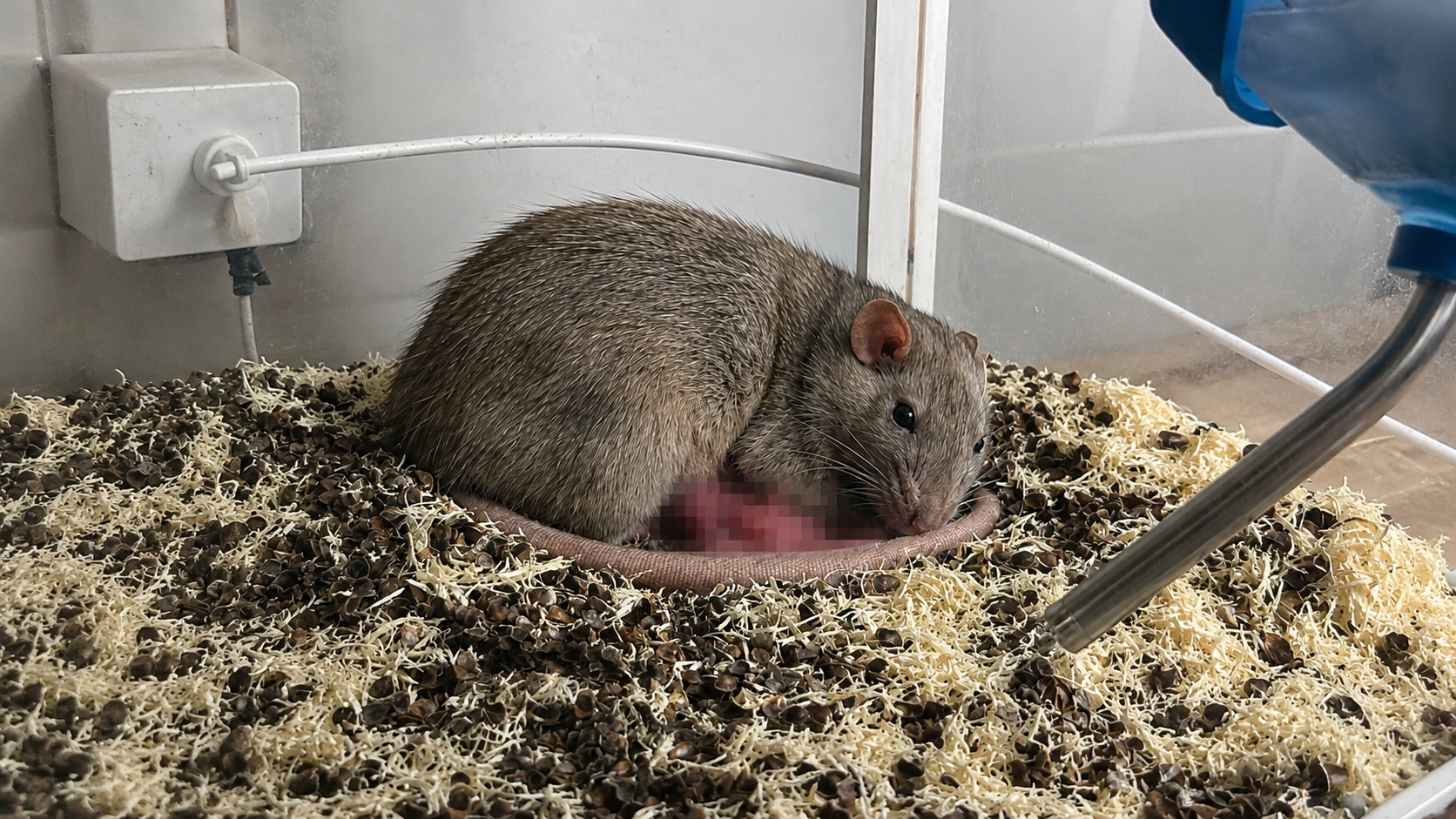
An Unexpected Birth in the Dormitory Mouse Cage
Abstract
Today, the mouse in the dormitory gave birth without any obvious warning signs. The event was sudden, quiet, and unexpected. This short article records what happened, what could be observed from the cage, and why this moment also shows the importance of a stable, low-disturbance monitoring setup for small animals.
Keywords: mouse cage monitoring; unexpected birth; newborn mice; animal observation; infrared camera; low-light monitoring
1. Introduction
At first, the cage appeared normal. There were no clear signs that the mouse was about to give birth. The bedding, food remains, and water bottle were all in their usual positions, and the mouse stayed close to the nesting area.
However, later in the day, the situation changed suddenly. Newborn pups were found inside the nest area, close to the mother. Because newborn mice are extremely small, fragile, and sensitive to disturbance, the image used in this article intentionally applies a soft mosaic blur to the pups.
The purpose of recording this moment is not only to document the event, but also to reflect on what kind of monitoring system is suitable for observing animals in a cage environment.
2. Observation of the Scene
The mother mouse stayed close to the newborn pups and appeared to be protecting them inside the nest. The cage contained soft bedding material, dark seed shells, and a metal water nozzle in the foreground. The mother remained near the pups, which is a natural protective behavior after birth.
The most important observation is that the birth happened without an obvious visible warning. This means that relying only on manual checking is not enough. A person may miss important events, especially when they happen quietly or during low-light periods.
For this reason, continuous monitoring is useful. A normal camera can record the scene during the day, but it may not work well at night. Since animals may become stressed under strong visible light, an infrared camera is more suitable for long-term observation.
3. Why the Newborn Area Is Blurred
The newborn pups are blurred in the illustration for two reasons.
First, newborn mice are visually sensitive and fragile, so the image should avoid showing excessive detail. Second, this kind of documentation should focus on the monitoring process and the motherâs protective behavior, rather than exposing the newborns too directly.
The mosaic effect keeps the event understandable while making the image more appropriate for a report or article.
4. What This Event Shows
This unexpected birth shows that animal cage monitoring needs more than image clarity. A useful monitoring system should also be quiet, stable, and able to work in low-light conditions.
A good setup should have the following qualities:
- It should record continuously without disturbing the animals.
- It should work during both daytime and nighttime.
- It should keep the nest area visible but not overexposed.
- It should allow later review when sudden events happen.
- It should reduce the need for frequent manual checking.
In this situation, an infrared camera would be especially useful because it can capture the cage environment in darkness without using strong visible light.
5. Conclusion
The mouse gave birth suddenly and without clear warning signs. This event shows why long-term cage monitoring should not depend only on occasional human observation. For small animal monitoring, especially around sensitive events such as birth, an infrared camera is not just a technical upgrade; it is a necessary tool for safe and reliable observation.
One-Sentence Summary
The sudden birth of the dormitory mouse shows that reliable cage monitoring requires a quiet, continuous, and infrared-capable camera system.
Comments (0)
Be the first to leave a thought.